
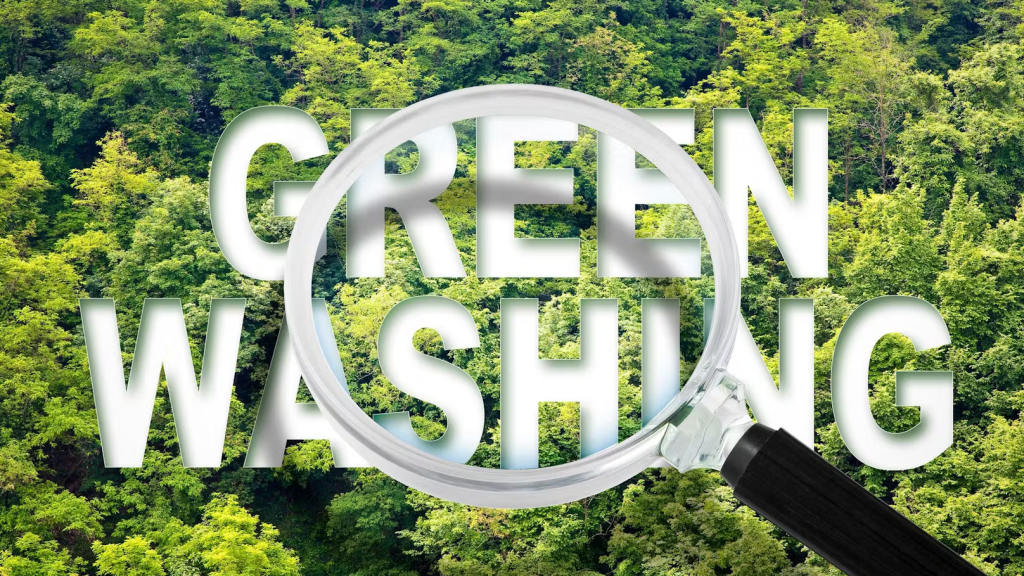
Greenwashing undermines credible efforts to reduce emissions and address the climate crisis. The Oxford English Dictionary defines it as: “The creation or propagation of an unfounded or misleading environmentalist image”. When a company or other entity misleads the public by saying it is doing more to protect the environment than it is, false solutions to the climate crisis distract and delay concrete and credible action.
Some greenwashing tactics are: Claiming to be on track to reduce a company’s polluting emissions to net zero when there are no credible plan; Being vague or non-specific about a company’s materials or operations; Applying misleading labels such as “green” or “eco-friendly”; Implying that a minor improvement has a major impact; Emphasizing a single environmental attribute while ignoring other impacts; or claiming to avoid illegal or non-standard practices that are irrelevant to a product.
How to avoid greenwashing?
86% of EU consumers want better information on the durability of products. That’s why on today’s blog we give you 7 tips to avoid greenwashing.
- Integrate sustainability into your strategy, not just your communications
- Communicate facts, not promises
- Avoid vague terms like eco-friendly without verifiable data
- Do not omit relevant information on impacts
- Monitor objectives and report progress with real indicators
- Use recognized standards (GRI, ESRS, Global Compact)
- Comply with legislation (EU 2024/825 against greenwashing, LCD, and the General Advertising Law in Spain)


