
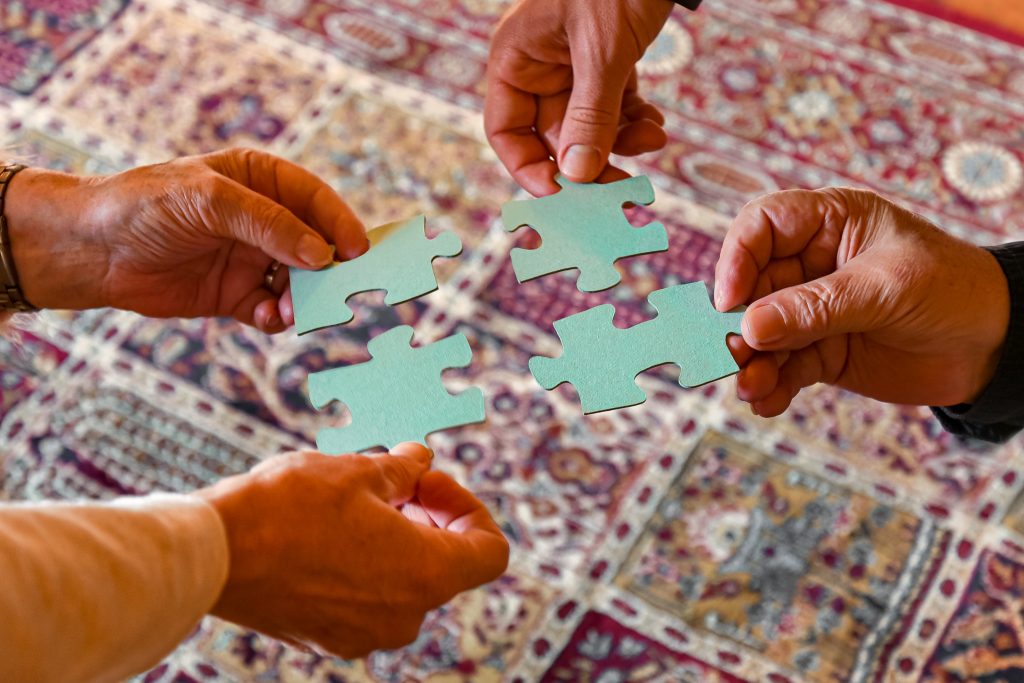
Co-creation can be defined as the collaborative development of new value through interactions between a wide range of voices that would normally never be heard to collaborate; ideas are shared and improved jointly, instead of being developed by individual agents. Co-creation is a process that allows overcoming some obsolete and restrictive practices, and develops closer relationships between the parties, breaking down some boundaries. The results from this are translated into concepts, solutions, products or services.
This tool comes handy in a world that is dealing with constant change, a high degree of global interconnectedness, multiculturalism and technological advances. If everyone is involved in the process from start to finish, it can provide benefits to everyone involved.
Can co-creation be enhaced by creativity?
By opening the creative process to a diverse team, in co-creation, each member brings a piece of his or her experience and knowledge. Innovative ideas are born precisely from this intersection between disciplines that seem, at first glance, incompatible. That way, co-creation not only transforms the way of working; it also strengthens bonds within teams.
Co-creation can meet with creativity. By defining the problem, involving the right people, establishing clear rules, using the right tools, and refining the proposed ideas, we can implement effective and sustainable co-creative processes. This means taking the concept of co-creation to the next level.
Staying open to new ideas throughout the creative process facilitates collaboration and co-creation of outcomes. Group creativity grows by expanding imaginative potential, creating the right environment and mental flexibility that can make personalities acting in an environment that feels creative, free and open
Co-creativity is always based on empathic connections and generates a safe space that enables creative engagement, sharing of ideas (collaboration) and thus co-creation.


